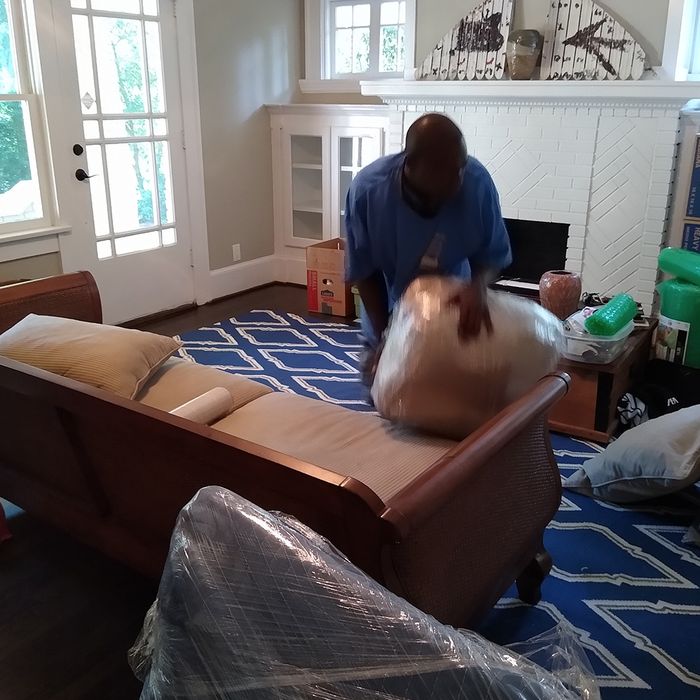
Fragile items break for one of two reasons: not enough padding, or too much empty space in the box. Fix both and almost anything survives a move.
Dishes And Glassware
Wrap each plate individually and pack them on their edge, like records in a crate, instead of stacking them flat. Edge-packed dishes handle bumps far better than a flat stack.
Glasses and stemware get a layer of paper inside the glass itself, then a wrap around the outside, before going into a box with dividers if you have them.
Mirrors, Art And Frames
Use painter’s tape in an X pattern across glass to hold it together if it cracks, then wrap in a moving blanket or bubble wrap and transport upright, never flat.
Electronics
Photograph the cable setup behind your TV or computer before you unplug anything — it saves real time on setup day. Original boxes are ideal, but a snug box with packing paper on all sides works just as well.
When To Let The Pros Handle It
Some items — large mirrors, curio cabinets, pianos — are genuinely safer left to a trained crew. Our
If packing everything yourself feels like too much on top of an already busy move, our ” class=”inline-link”>unpacking crew knows what to tackle first. For anything genuinely fragile, a clear “FRAGILE” marking on at least two sides of the box, plus an arrow showing which way is up, meaningfully reduces the chance it gets stacked wrong under something heavy. Self-packing works fine for most of a home, but a few categories are genuinely worth handing off: anything with sentimental or irreplaceable value, large collections of glassware or china, and anything you simply don’t have time to do carefully because the move snuck up on you. Our crew packs these items daily and carries the padding, dividers, and dish-pack boxes that most households don’t keep on hand for a once-every-few-years move. Beyond photographing your cable setup, a few more electronics-specific tips go a long way. Let printers and anything with ink settle upright for a few hours before moving to avoid leaks. Remove batteries from remotes and small devices to prevent corrosion during transit. And for anything with a screen, a snug fit in the box matters more than padding volume — loose movement inside the box is what cracks screens, not the outside of the box itself. Going room by room like this, rather than trying to remember everything fragile in the house at once, is the easiest way to make sure nothing gets packed carelessly in the rush of a busy moving week. A common mistake goes one of two directions: either wrapping everything so heavily that boxes become unnecessarily bulky and expensive to pack, or under-padding out of a desire to save on supplies. The right amount of padding means an item can’t shift more than a small amount inside its box when gently shaken. If you hear movement, add more paper or bubble wrap around the gaps, particularly in the corners of the box where impact damage is most likely to happen. For genuinely valuable or one-of-a-kind items — a wedding china set, a family heirloom, original artwork — err on the side of more protection than feels necessary. The cost of an extra roll of bubble wrap is nothing compared to the cost of replacing something that can’t be replaced. Pack fragile items earlier in your packing timeline rather than later, when you’re rushed and more likely to cut corners. A realistic plan puts breakable items in the first half of your packing schedule, leaving the more forgiving items (clothing, linens, non-fragile decor) for the final days when time pressure is highest. This single scheduling choice prevents more breakage than almost any specific wrapping technique. If you’re packing multiple times over the years, quality moving blankets, sturdy boxes, and bins can be reused move after move, which saves money and reduces waste. Store them flat and dry between uses, and inspect boxes for weakened corners or water damage before reusing them for anything fragile — a compromised box is a false economy that risks the items inside it. After years of packing homes across Georgia, a few things stand out as consistently underrated: label makers save real time on delivery day, a “first box” clearly marked with essentials reduces first-night stress dramatically, and asking questions before packing day — not during it — leads to a noticeably smoother experience. None of these tips are complicated, but together they make a real difference. Fragile items headed on a
If you only take one thing from this guide, let it be this: take your time with fragile items specifically, even if you’re rushing through everything else. The few extra minutes per box are almost always the difference between everything arriving intact and one avoidable, disappointing surprise on delivery day. Tell us about your move and get a transparent quote within one business day.When Professional Packing Makes The Most Sense
Packing Electronics Safely
A Room-By-Room Fragile Items Checklist
How Much Padding Is Actually Enough
Timing Your Packing Around Fragile Items
Reusing Packing Materials Responsibly
What Our Crew Wishes Every Customer Knew
Packing For A Long Distance Move Vs A Local One
One Last Tip Worth Remembering
Ready To Get Your Free Estimate?